

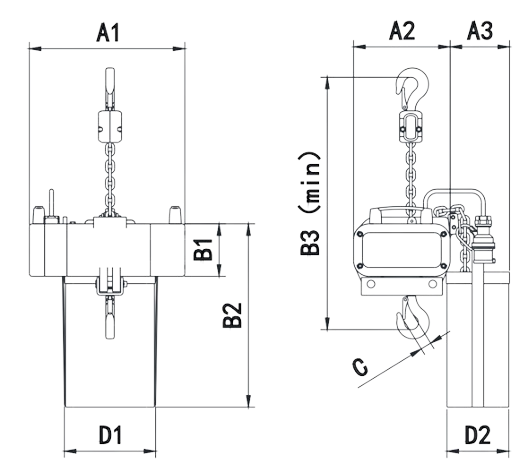
If you are comparing C10 vs C20 vs V05 vs V10, the real decision is not only load capacity. You also need to match the hoist to the venue type, show workflow, operating speed, controller strategy, and long-term rigging plan. For B2B buyers, rental companies, theaters, concert integrators, and studio contractors, choosing the wrong model usually means either paying for capability you will never use or limiting future production flexibility.
Coreat’s range covers two common specification paths. The C10 / C10 Plus and C20 are fixed-speed models for dependable permanent lifting. The V05 / V05 Plus and V10 / V10 Plus are variable-speed models built for live entertainment, touring, and applications where movement quality matters.
This guide compares the four models from a buyer’s point of view so you can shortlist the right stage electric chain hoist faster and with fewer specification mistakes.
C10 vs C20 vs V05 vs V10 at a glance
| Model | Best fit | Operating style | Typical application |
|---|---|---|---|
| C10 / C10 Plus | 1,000 kg fixed installation lifting | Single speed | Theaters, auditoriums, studios, hotel ballrooms |
| C20 | 2,000 kg heavy permanent loads | Single speed | Large venues, theme attractions, oversized scenic loads |
| V05 / V05 Plus | Mid-capacity live movement | Variable speed | Concert touring, event truss, flexible performance spaces |
| V10 / V10 Plus | High-capacity live and production lifting | Variable speed | Arenas, opera houses, broadcast grids, large touring rigs |
If you are still reviewing the wider product range, this Coreat hoist selection guide is a useful companion article.
When C10 is the right choice
The C10 is usually the most practical answer when the project is a permanent installation and the hoist does not need speed variation during the show. It gives you 1-ton lifting capacity in a simpler single-speed format, which is often exactly what fixed theater and studio grids require.
Choose C10 if your project needs:
- Reliable lifting for lighting bars, scenic elements, speakers, or AV equipment in a fixed venue
- Lower system complexity for venue operators and maintenance teams
- BGV D8 or C10 Plus double-brake protection for higher-spec permanent use
- A cost-effective solution where smooth live speed control is not necessary
For venue owners, the C10 often delivers the best balance between price, capacity, and long-term simplicity. It is especially common in theaters, conference centers, churches, and broadcast studios where the rig is installed once and then used repeatedly with predictable loads.
When C20 makes more sense than C10
The C20 is not just a larger version of the C10. It is the right answer when your suspended loads are heavier, your scenic structures are larger, or the venue wants additional headroom for future productions. If your engineering team expects major scenic pieces, dense truss systems, or unusually heavy permanent infrastructure, C20 reduces the risk of specifying too close to the load limit.
C20 is typically better than C10 when:
- Your project includes heavy scenic assemblies or oversized LED and truss structures
- You want 2,000 kg capacity for permanent heavy-duty entertainment rigging
- The client values future-proofing for larger productions over minimum initial cost
- The installation is in a large cultural venue, theme park, or immersive attraction
In short, choose C20 when weight margin is the main issue and live variable motion is not. Buyers often use it for heavy, long-cycle installations where reliability and structural confidence are more important than movement finesse.
Where V05 fits best
The V05 moves the discussion from pure lifting to show control. It is a variable-speed stage hoist, which means operators can adjust movement quality for setup, rehearsal, and live performance. That makes it a strong option for concert production, rental inventory, and multipurpose event spaces where the same rig must handle different show formats.
V05 is a strong fit if you need:
- Variable speed for dynamic lifting instead of simple up/down operation
- Mid-capacity performance lifting for touring truss, lighting, and scenic motion
- Greater creative control in venues that host concerts, festivals, and branded events
- A flexible specification that can serve both fixed use and temporary productions
For many rental companies and touring suppliers, V05 becomes the “all-around” choice because it covers a broad range of entertainment applications without moving into the larger, heavier-duty footprint of V10.
Why buyers step up to V10
V10 is the model to consider when your project combines high capacity and live control. It is designed for more demanding theatrical productions, arena systems, larger touring packages, and broadcast grids where both load size and movement quality matter. If the project needs a variable-speed hoist but the suspended loads are beyond what a mid-range unit should comfortably handle, V10 is the safer specification path.
V10 is usually the right answer for:
- Large theaters, opera houses, arenas, and stadium production systems
- Heavy truss, speaker clusters, scenic motion, or large studio grid structures
- Projects that need variable speed and higher load confidence at the same time
- Production teams running frequent cue changes and demanding schedules
Compared with V05, V10 gives more capacity margin for premium venues and larger show packages. Compared with C10 or C20, it adds the motion control benefits required in live entertainment environments.
Controller choice changes the buying decision
One of the biggest specification mistakes is to compare hoists without comparing the control architecture. Fixed-speed and variable-speed systems create different operational workflows. If you are planning a multi-hoist rig, the controller should be chosen at the same time as the hoist, not after the fact.
Coreat’s stage hoist controllers support configurations from smaller portable systems to larger synchronized lifting setups. If your team is evaluating controller options now, this article on how to choose the right stage hoist controller explains the control side in more detail.
How to choose between the four models
- Choose C10 for 1-ton fixed installations with straightforward operating requirements.
- Choose C20 for heavier permanent loads where extra capacity and structural margin matter most.
- Choose V05 for mid-capacity live entertainment work where variable speed is required.
- Choose V10 for larger live productions that need both variable speed and higher lifting confidence.
If the application is still unclear, work backwards from four questions: What is the real suspended load? Will the hoist move during the show? How many hoists must operate together? Is the venue fixed, touring, or hybrid? That framework usually narrows the specification quickly.
Final recommendation for B2B buyers
There is no universal winner in the C10 vs C20 vs V05 vs V10 comparison. The best model is the one that fits your venue use case, risk tolerance, and control requirements. For permanent installations, buyers usually end up choosing between C10 and C20. For live entertainment and touring, the decision usually shifts to V05 or V10.
If you want help matching a Coreat hoist to your theater, concert venue, studio, or rental fleet, contact the Coreat team. We can review your load range, operating method, controller needs, and venue type, then recommend a practical specification for quotation and project planning.