

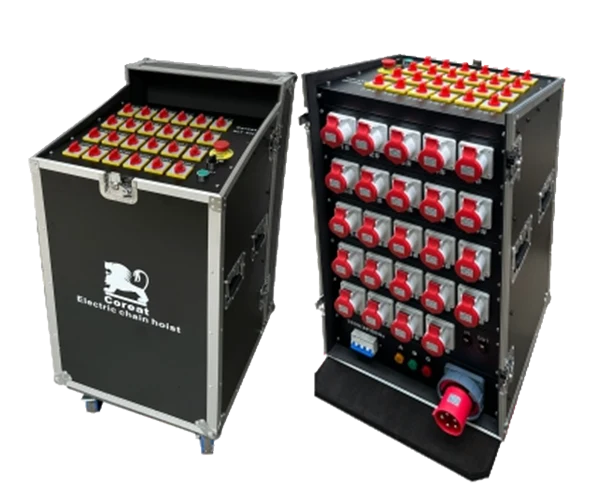
A stage hoist controller maintenance checklist helps venues, rental companies, and production teams keep multi-hoist systems dependable between shows. While operators often focus on the hoists themselves, the controller is the command center for synchronized lifting, emergency stop response, channel labeling, and day-to-day workflow. If the controller is poorly maintained, even a well-built hoist system becomes harder to operate safely and efficiently.
This guide covers practical inspection points for portable and fixed-installation controllers used in entertainment rigging. If you also need hoist-side inspection points, review Coreat’s stage electric chain hoist maintenance checklist together with the controller checks below.
Why controller maintenance deserves its own procedure
A stage hoist controller is exposed to dust, vibration, cable wear, transport damage, and repeated handling. Touring systems may be loaded into trucks every week, while fixed venue systems can sit in equipment rooms where loose labeling, poor ventilation, or neglected connectors create slow failures over time.
Coreat’s KLT controller range covers portable cases, rack-mount formats, and large rolling cabinets. Each format changes how the unit should be inspected, but the maintenance goal is the same: clean operation, clear channel control, and predictable response every time a hoist moves.
Daily or pre-show controller checks
Before a rehearsal, load-in, or live operation window, technicians should complete a short visual and functional inspection.
- Confirm the enclosure, handles, latches, wheels, and panel hardware are secure with no obvious transport damage.
- Check power inlets, plugs, and output connectors for looseness, heat discoloration, bent pins, or contamination.
- Verify emergency stop buttons reset correctly and move freely.
- Confirm channel labels still match the actual hoist assignments on site.
- Test indicator lights, direction buttons, key switches, and any touchscreen or selector functions before lifting load.
- Inspect cable strain relief and make sure no cable jackets are crushed, cut, or sharply kinked.
For large venue systems, many crews pair this with a broader stage hoist system design review so that controller layout, cable routing, and operator position still fit the current production setup.
Weekly and monthly preventive maintenance tasks
Connector and cable care
Clean connectors with the correct approved method for your site, check for retention strength, and replace worn output cables before intermittent faults appear during a lift. Loose or damaged connectors are among the most common causes of control problems in multi-hoist systems.
Panel controls and channel logic
Test every active channel, not only the ones most frequently used. The goal is to confirm that up, down, stop, and group operation respond consistently. If a venue uses multiple controller formats such as portable and rack units, record the inspection against the exact serial number or channel group.
Cooling, dust, and enclosure condition
Rack-mounted and cabinet-style controllers should be checked for blocked vents, excess dust, moisture intrusion, and loose internal mounting hardware. Touring controllers in waterproof or flight-style cases still need routine internal inspection because dirt and condensation can build up over time.
Different priorities for touring systems and fixed venues
Touring productions
Portable controllers live a harder physical life. Their maintenance plan should emphasize case impact damage, connector wear, rolling hardware, and fast pre-show function checks. A touring team should also keep a clear spare-cable plan because cable failures are often more common than controller-core failures.
Theaters, studios, and permanent installations
Fixed installations usually experience less transport damage, but they require stronger discipline around labeling, rack airflow, access control, and maintenance records. If the controller stays in an equipment room, the risk is not rough handling but gradual neglect.
Buyers comparing permanent and portable control formats should also review Coreat’s article on how to choose the right stage hoist controller before specifying new hardware.
Warning signs that need service before the next lift
- Buttons that stick, feel inconsistent, or fail to spring back cleanly.
- Intermittent channel response or controls that only work after reconnecting a cable.
- Heat marks, burning smell, or visible discoloration around power connections.
- Broken label windows, unreadable channel IDs, or unclear emergency-stop status.
- Touchscreen delay, failed indicator lamps, or unexplained communication errors on linked systems.
If any of these issues appear, the controller should be removed from operational use until a qualified technician checks the unit. The cost of a delayed repair is usually far lower than the risk of troubleshooting during a live production window.
Build a maintenance record that supports procurement decisions
Maintenance logs are not only for safety documentation. They also help technical managers decide when to refurbish, replace, or add controller capacity. If the same channels, cables, or enclosures repeatedly show problems, that data becomes useful when planning upgrades or selecting the next controller format.
For buyers evaluating a new hoist package, controller maintenance planning should be included in the same conversation as hoist selection, operating workflow, and venue application. That is especially true for theaters, concert tours, and studios using multiple hoists on one control platform.
Talk to Coreat about controller planning and support
Coreat supplies controller options from compact portable units to high-channel-count cabinets for entertainment rigging projects. If you need help selecting a controller layout, replacement strategy, or service-friendly system design, contact Coreat to discuss your hoist count, venue type, and operating workflow.