

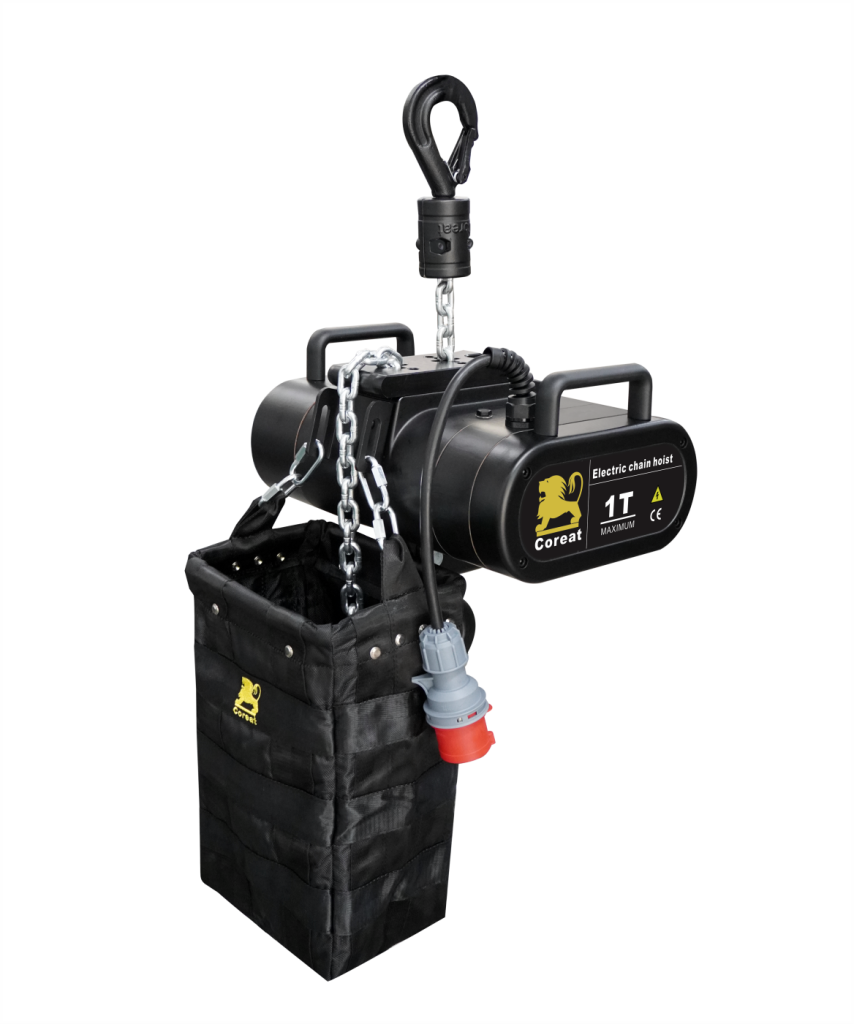
Stage hoist capacity calculation starts with accurate load planning, not just model comparison. For production companies, theaters, rental houses, and system integrators, the first technical question is simpler and more important: how much load does each hoist need to carry in the real application?
Whether you are lifting a lighting truss, an LED wall, or a speaker cluster, a sound capacity calculation helps you avoid underspecifying the system, overbuying unnecessary equipment, and creating installation headaches later. It also makes it easier to compare V05, V10, C10, and C20 options against the actual job requirement.
In this guide, we walk through a practical stage hoist capacity calculation process that buyers can use before requesting a quote or finalizing a rigging layout.
Why capacity calculation matters before you compare hoist models
Many buyers start by asking whether they need a touring hoist or a permanent-installation hoist. That matters, but capacity comes first. If the load estimate is wrong, the rest of the selection process becomes unreliable.
A proper calculation helps you:
- match the hoist working load to the real suspended load,
- estimate how many hoists are required across a truss or structure,
- decide whether a mid-capacity or heavy-duty model is more suitable,
- coordinate the hoist layout with the controller system, and
- give your supplier enough information to recommend the right configuration faster.
Step 1: Define the total suspended load
Start with the total weight of everything that will be lifted by the hoist set. In stage and entertainment rigging, that usually includes the structure itself plus every mounted component.
For trusses
- truss weight,
- lighting fixtures, cables, and clamps,
- moving lights, follow spots, or scenic attachments,
- distribution boxes or accessories mounted on the truss.
For LED walls
- LED panels,
- header beam or hanging bar,
- rigging frame, motors, and cable loom,
- any structural bracing or masking elements.
For speaker clusters
- line array cabinets,
- fly frame, bumper, and shackles,
- cabling and any associated rigging hardware.
If the system will be installed permanently, include any hardware that stays in the structure full time. If the system tours, include practical accessories that travel and fly with the package.
Step 2: Add a realistic engineering margin
The suspended load is not the only number that matters. Buyers should also account for practical uncertainty in equipment lists, future add-ons, and rigging distribution. Even when each point load looks acceptable on paper, an installation can become restrictive if no margin is left in the design.
A simple buyer-side rule is to calculate the known load first, then add a sensible planning allowance before matching the result to a hoist model. The exact factor should follow the project engineer, venue standard, and local safety practice, but the key principle is clear: do not size a hoist system to the absolute minimum theoretical load.
This is also why many buyers review safety classifications early. If you are still comparing basic requirements, our article on D8 vs D8 Plus stage hoists is a useful companion read.
Step 3: Divide the load across the actual hoist points
Once you know the total design load, divide it across the planned hoist points based on the real rigging layout, not a rough average. A four-point truss, for example, does not always distribute weight perfectly equally. The same is true for asymmetrical LED walls and offset speaker arrays.
Ask these questions:
- How many hoists will share the load?
- Are all pick points equally loaded?
- Will one side carry heavier scenic or audio equipment?
- Is the trim height or chain travel the same on every point?
For complex systems, the best approach is to validate the hoist-point loads during the rigging design stage. Coreat’s stage hoist system design guide explains how application type affects the overall layout.
Step 4: Match the application to the right Coreat hoist range
After load calculation, you can evaluate which Coreat series fits the job style and environment.
V05 and V10 for touring and flexible event rigging
The V05 is a strong option when buyers need a practical touring hoist for lighting trusses, moderate LED walls, and general event rigging. The V10 moves into heavier-duty territory for larger productions, arena applications, and more demanding suspended loads.
If the package will move regularly between venues, buyers often prefer V-series models because portability and touring workflow matter as much as raw capacity.
C10 and C20 for permanent installations and heavier structural loads
The C10 is a reliable choice for permanent stage installations that require straightforward one-tonne lifting in theaters, auditoriums, and studios. When the application requires substantially more load capacity, the C20 is designed for heavier scenic structures and large permanent installations where maximum capacity becomes the priority.
If your project is comparing permanent and touring logic at the same time, see our related guide on V-Series vs C-Series stage hoists.
Step 5: Check controller capacity as well as hoist capacity
Hoist selection and controller planning should happen together. A buyer may choose the correct hoist model but still create integration issues by overlooking controller channel count, enclosure format, or expansion requirements.
For example, a temporary event package may need a portable waterproof controller, while a theater may prefer a rack-mount layout. Coreat’s KLT controller range covers both portable and permanent-installation formats, from small channel counts to larger synchronized systems.
For more controller planning detail, you can also review:
- how many hoists one controller can run,
- portable vs rack-mount stage hoist controllers, and
- how to choose the right control system.
Common mistakes buyers should avoid
- Using only the equipment weight and forgetting rigging hardware, frames, or cable load.
- Assuming all hoist points carry the same load in an uneven structure.
- Choosing capacity based only on headline tonnage without considering the application type.
- Separating hoist purchasing from controller planning.
- Waiting until final procurement to involve the manufacturer in load and layout review.
Turn the load calculation into a better RFQ
The more clearly you define load, point distribution, venue type, and control requirements, the faster a manufacturer can recommend the correct system. For B2B buyers, that means fewer revisions, better model matching, and a smoother path from quotation to installation.
If you are planning a theater, concert, studio, or touring rig and want help comparing V05, V10, C10, and C20 options, contact Coreat. Our team can review your application, proposed load range, and controller requirements to help you specify a practical stage hoist solution.